
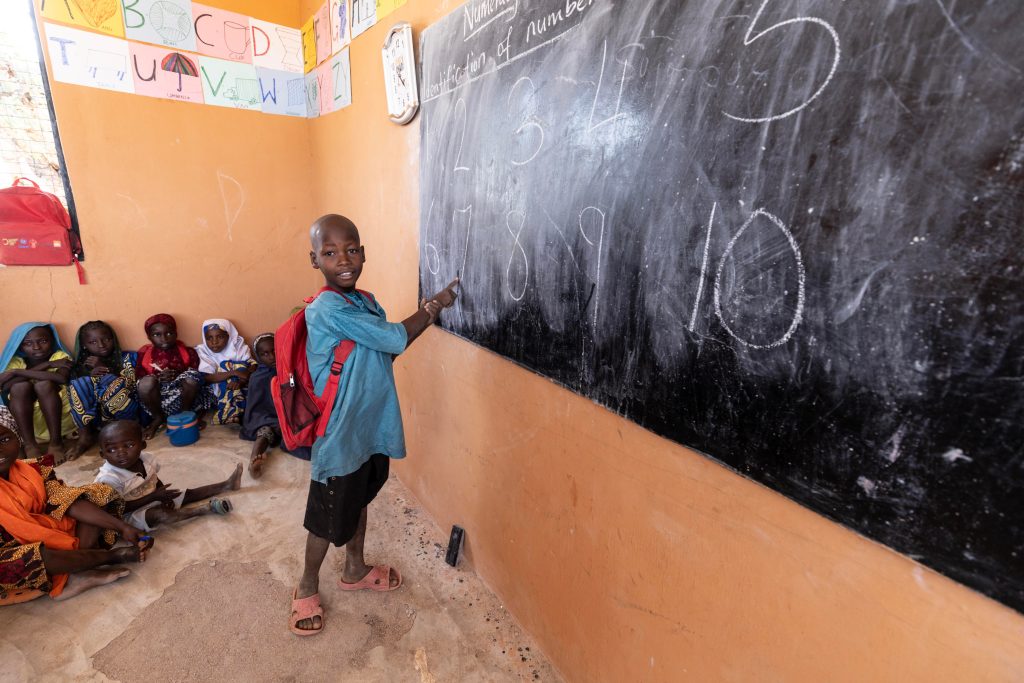

Education is widely regarded as one of the most powerful tools for breaking cycles of poverty and promoting national development. In Nigeria, however, poverty itself has become one of the biggest obstacles preventing millions of children from accessing quality education and achieving strong learning outcomes. While school enrolment rates have improved in some regions over the years, educational attainment and actual learning performance remain deeply unequal, largely because of economic hardship.
Nigeria currently faces one of the world’s most severe learning crises. According to the United Nations Children’s Fund, the country has one of the highest numbers of out-of-school children globally, with millions of school-age children either completely excluded from formal education or receiving poor-quality instruction. Poverty is at the centre of this crisis. Children from low-income households are significantly more likely to experience poor academic performance, irregular attendance, school dropout, malnutrition, and limited access to educational resources.
The relationship between poverty and learning is complex because it extends beyond school fees or income levels. Poverty affects nearly every condition required for effective learning, including nutrition, health, psychological stability, access to technology, learning materials, transportation, and the quality of schools available to children. As a result, educational inequality in Nigeria often mirrors wider socio-economic inequality.
Research consistently shows that students from economically disadvantaged backgrounds perform worse academically than their more privileged peers. The World Bank has repeatedly warned that poverty and weak educational systems are contributing to a “learning poverty” crisis across developing countries, including Nigeria. Learning poverty refers to the inability of children to read and understand simple texts by the age of 10, a foundational skill critical for future learning.
One of the most direct ways poverty affects education in Nigeria is by denying children the basic conditions necessary for effective learning. For many students from low-income families, schooling takes place under extremely difficult circumstances that undermine concentration, participation, and academic performance.
Nutrition is one of the clearest examples. Scientific research shows that proper nutrition is closely linked to cognitive development, memory, and attention span. Children suffering from malnutrition are more likely to experience fatigue, poor concentration, and delayed cognitive growth. In Nigeria, food insecurity remains widespread, particularly in rural communities and conflict-affected regions.
According to the World Food Programme, hunger significantly affects children’s ability to learn because undernourished students struggle to maintain attention during lessons and often experience reduced academic performance. Many Nigerian pupils attend school without breakfast or adequate daily nutrition, limiting their capacity to absorb information effectively.
Healthcare access is another major factor. Poor children are more likely to suffer untreated illnesses such as malaria, respiratory infections, and waterborne diseases, which contribute to absenteeism and learning disruptions. Vision problems, hearing impairments, and other health conditions frequently go undiagnosed because families cannot afford medical care.
Living conditions also affect educational outcomes. Students from poor households often study in overcrowded environments with limited electricity, poor ventilation, and high noise levels. In communities without reliable power supply, children may be unable to read or complete assignments at night. This places them at a disadvantage compared to students from wealthier homes with better learning environments.
Poverty further restricts access to educational materials. Many families cannot afford textbooks, internet access, writing materials, school uniforms, or transportation. In some public schools, students share outdated learning resources or learn in classrooms lacking basic instructional materials altogether.
The digital divide has made these inequalities even more visible. As education systems globally become more technology-driven, students without access to computers, smartphones, or internet connectivity are increasingly disadvantaged. During the COVID-19 pandemic, millions of Nigerian students from low-income backgrounds were effectively excluded from remote learning opportunities because they lacked digital access.
The problem extends beyond students themselves to schools located in poor communities. Many underfunded public schools lack qualified teachers, functional laboratories, libraries, and adequate classroom infrastructure. Overcrowded classrooms are common, especially in urban slums and rural areas, making effective teaching difficult.
Research conducted on educational inequality in Nigeria consistently shows that children attending poorly funded schools achieve lower learning outcomes than students in better-resourced institutions. The quality gap between elite private schools and many public schools continues to widen, reinforcing socio-economic disparities.
The impact of poverty on learning is not limited to material deprivation; it also affects students psychologically and emotionally. Economic hardship creates stress and instability that can significantly reduce academic performance and school engagement.
Studies in child psychology show that chronic financial stress affects cognitive functioning, memory, and emotional regulation. Children growing up in poverty are more likely to experience anxiety, depression, and emotional distress, all of which interfere with concentration and learning.
In Nigeria, economic insecurity often creates unstable home environments. Parents struggling with unemployment or low income may experience significant stress themselves, affecting the emotional atmosphere within households. In some cases, children are forced to combine schooling with labour or petty trading to support family income.
This dual burden affects both attendance and academic focus. Students who engage in hawking, farming, domestic labour, or informal work before or after school frequently arrive in class exhausted and unable to concentrate fully. Some miss lessons entirely during periods of economic hardship.
The psychological impact of social inequality within schools can also be severe. Students from poor backgrounds may experience stigma, exclusion, or bullying because of their appearance, inability to afford school materials, or unpaid fees. These experiences affect self-esteem and motivation, contributing to disengagement from learning.
Educational research has shown that students perform better when they feel emotionally secure and socially included within school environments. Poverty undermines this sense of belonging for many children.
The fear of financial instability also shapes educational aspirations. In many low-income communities, students may struggle to see the practical value of education when unemployment remains high even among graduates. This can reduce long-term academic motivation.
Gender inequality further complicates the situation. In poor households, girls are often more vulnerable to early marriage, domestic responsibilities, or school withdrawal due to financial constraints. Economic hardship disproportionately affects girls’ educational opportunities in several parts of Nigeria.
Conflict and displacement deepen these challenges. In northern Nigeria, insecurity caused by banditry, insurgency, and communal violence has displaced thousands of families, disrupting education for millions of children. Poverty and insecurity often reinforce one another, creating conditions where sustained learning becomes extremely difficult.
According to the United Nations Educational, Scientific and Cultural Organization, children affected by displacement and poverty face significantly greater risks of school dropout and long-term learning loss.
Read also:
Rescuing Nigeria’s Future: A Strategic Rejoinder on the State of Learning Poverty and the Imperative for Comprehensive Educational Reform
The gap between classroom learning and workplace reality in Nigeria
The effects of poverty-driven educational inequality extend far beyond individual students. Weak learning outcomes have serious implications for Nigeria’s economic development, workforce productivity, and social stability.
A country’s human capital depends heavily on the quality of its education system. When millions of children receive poor-quality education or fail to acquire foundational skills, the economy loses future productivity and innovation capacity.
The World Bank has repeatedly emphasised that learning quality, not merely school attendanceis critical for economic growth. Children who complete school without strong literacy, numeracy, and problem-solving skills are less likely to secure stable employment or contribute effectively to national development.
This contributes to the cycle of intergenerational poverty. Poor educational outcomes limit employment opportunities, which in turn perpetuates economic hardship across generations. In this way, poverty and weak education continuously reinforce one another.
Graduate unemployment in Nigeria partly reflects this issue. Employers frequently complain that many graduates lack practical competencies, communication skills, and critical thinking abilities. These deficiencies often originate from foundational weaknesses earlier in the education system.
Educational inequality also widens broader social inequality. Wealthier families can afford private schools, technology access, tutoring, and international educational opportunities, while poorer households remain dependent on under-resourced public systems. Over time, this creates unequal access to economic opportunities and social mobility.
The consequences are also political and social. High youth unemployment and educational exclusion increase vulnerability to crime, exploitation, political manipulation, and social unrest. In regions where educational opportunities are severely limited, poverty can contribute to insecurity and instability.
Research consistently shows that investment in education reduces poverty rates and improves long-term economic resilience. Countries with stronger educational systems tend to experience higher productivity, lower inequality, and better health outcomes.
Addressing the relationship between poverty and learning outcomes requires more than increasing school enrolment. Nigeria must focus on improving both access and learning quality simultaneously.
One critical priority is increased investment in public education infrastructure. Schools in disadvantaged communities require better classrooms, qualified teachers, learning materials, electricity, water supply, and digital resources.
School feeding programmes have also shown measurable benefits in improving attendance, concentration, and academic performance. Evidence from multiple countries demonstrates that school meals increase both enrolment and learning outcomes among low-income children.
Teacher quality remains essential. Well-trained teachers are more capable of supporting students facing socio-economic challenges. Continuous teacher development programmes can improve instructional quality and student engagement.
Social protection policies are equally important. Conditional cash transfer programmes, scholarships, and educational subsidies can help reduce financial barriers preventing children from attending school regularly.
Mental health support should also become part of educational policy. Many students facing poverty-related stress require emotional and psychological support to remain academically engaged.
Technology access is another growing necessity. Expanding internet connectivity and digital learning opportunities for disadvantaged communities can help reduce educational inequality, especially as global education becomes increasingly technology-driven.
Most importantly, poverty reduction itself must remain central to educational reform. Education cannot thrive where families lack basic economic security. Broader economic policies addressing unemployment, inflation, and household income are therefore directly connected to learning outcomes.
Poverty remains one of the most significant barriers to educational success in Nigeria. Its effects extend far beyond the inability to pay school fees, influencing nutrition, health, emotional well-being, school quality, access to technology, and long-term academic achievement.
The result is a deeply unequal education system where socio-economic background often determines learning outcomes more than ability or potential. Millions of Nigerian children are therefore denied not only quality education but also the opportunities that education should provide.
Solving this crisis requires sustained investment, policy reform, and a broader understanding that education and economic welfare are inseparable. Until poverty itself is addressed more effectively, efforts to improve educational outcomes will remain limited.
For Nigeria to build a more productive, innovative, and equitable future, reducing poverty-driven educational inequality must become a national priority.