

Dive Brief:
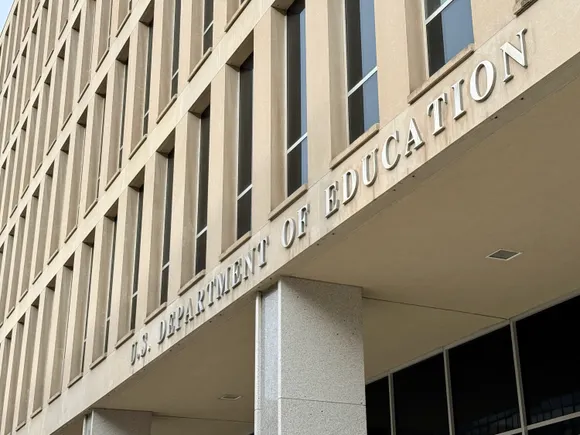
- The U.S. Department of Education released draft regulations Mondayto overhaul the accreditation system, including by easing the pathway for new accreditors to form and requiring agencies to have standards requiring intellectual diversity among faculty.
- The proposed changes are in line with President Donald Trump’s executive order in April 2025 that blasted diversity, equity and inclusion standardsand directed the Education Department to resume recognition of new accrediting agencies.
- The agency released the draft ahead of negotiated rulemaking, a process that brings together groups in the higher education sector to hash out policy changes. The negotiated rulemaking group — which includes representatives for students, colleges and accreditors — will begin meeting next week to begin policy discussions.
googletag.display(‘dfp-hybrid1-mobile’)); googletag.pubads().addEventListener(‘slotRenderEnded’, function (event) { var adUnitPath = ‘/3618/highereddive/highereddivehybrid1’; var onProformative = false; if (onProformative && event.slot.getAdUnitPath() === adUnitPath && !event.isEmpty ) { var adUnitPathWithVisibility = adUnitPath + ‘-mobile’; var selector = ‘.pf-comments__ad-wrapper #dfp-hybrid1-mobile’; if (!$(selector).closest(‘.pf-comments__ad-wrapper’).hasClass(‘borders’)) { $(selector).closest(‘.pf-comments__ad-wrapper’).addClass(‘borders’) } } }); } }); }); ]]>
googletag.display(‘dfp-hybrid2-desktop’)); googletag.pubads().addEventListener(‘slotRenderEnded’, function (event) { var adUnitPath = ‘/3618/highereddive/highereddivehybrid2’; var onProformative = false; if (onProformative && event.slot.getAdUnitPath() === adUnitPath && !event.isEmpty ) { var adUnitPathWithVisibility = adUnitPath + ‘-desktop’; var selector = ‘.pf-comments__ad-wrapper #dfp-hybrid2-desktop’; if (!$(selector).closest(‘.pf-comments__ad-wrapper’).hasClass(‘borders’)) { $(selector).closest(‘.pf-comments__ad-wrapper’).addClass(‘borders’) } } }); } }); }); ]]>
Dive Insight:
Trump’s executive order on accreditation lambasted three accreditors over their diversity, equity and inclusion standards and called on the U.S. education secretary to punish agencies that had such requirements.
Several accreditors have suspended or nixed their DEI requirements in response. But just last month, Under Secretary Nicholas Kent, the Education Department’s top-ranking higher ed official, directed two accreditors to formally eliminate their DEI standards — even though they were suspended — or else risk losing federal recognition.
Monday’s draft regulations are in line with these moves. They would require accreditors to comply with all federal and state laws, including “the prohibition of preferential treatment based on protected characteristics,” according to a summary of the proposal, which listed race-based scholarships as an example of a violation.
However, the Education Department has run into legal setbacks over its interpretation of civil rights law.
In February 2025, for instance, the agency released sweeping guidance that argued that the 2023 U.S. Supreme Court ruling striking down race-conscious admissions meant that colleges were prohibited from considering race in any of their policies, including scholarships, housing and graduation ceremonies.
A federal court struck down the anti-DEI guidance in August, ruling that it was unconstitutional. The Education Department ended its effort to appeal the case earlier this year.
The new draft regulations also would require accreditors to have standards related to intellectual diversity. Specifically, accreditors would have to ensure colleges have policies that allow for “a range of academic perspectives” to be expressed.
Jon Fansmith, senior vice president for government relations and national engagement at the American Council on Education, previously voiced concern for regulations governing accreditor standards on intellectual diversity.
At ACE’s conference in February, he noted that the Trump administration’s proposed compact for higher education — which was rejected by most of the colleges that initially received it — also asked colleges to prioritize intellectual diversity.
“Their goal is to force the accreditors to make those changes as well, to become the agents of that policy,” Fansmith said at the conference.
The draft proposal also seeks to streamline the process for recognizing new accreditors— a move that could help the newly formed Commission for Public Higher Educationget federal recognition. Six public university systems in Southern states launched CPHE last year to create an accreditor specifically for public institutions.
The draft text would eliminate current regulatory language that says an agency must deny or grant accreditation to a higher education institution for at least two years before they even seek recognition from the Education Department. The Education Department currently aims to complete these reviews within a year at most, meaning it can take several years for an accreditor to gain federal recognition after forming.
But the new proposal would allow the department to consider a range of criteria when deciding whether to grant initial recognition. Possible metrics would include whether the accreditor has adopted standards consistent with federal regulations, granted accreditation to an institution or conducted site visits.