

The world is heading towards a big jump in electricity demand — specifically, a 40% increase by 2035, reaching nearly 37,800 terawatt hours. As everything from cars to factories goes electric, power systems are becoming the backbone in driving economic growth and energy security. But building that future grid system won’t be easy. It calls for smarter planning, updated policies, and more agile grid management.
As the energy landscape evolves, so do the opportunities to make an impact. Below are four North American universities that offer energy and sustainability degrees for you to advance clean energy and develop climate solutions.
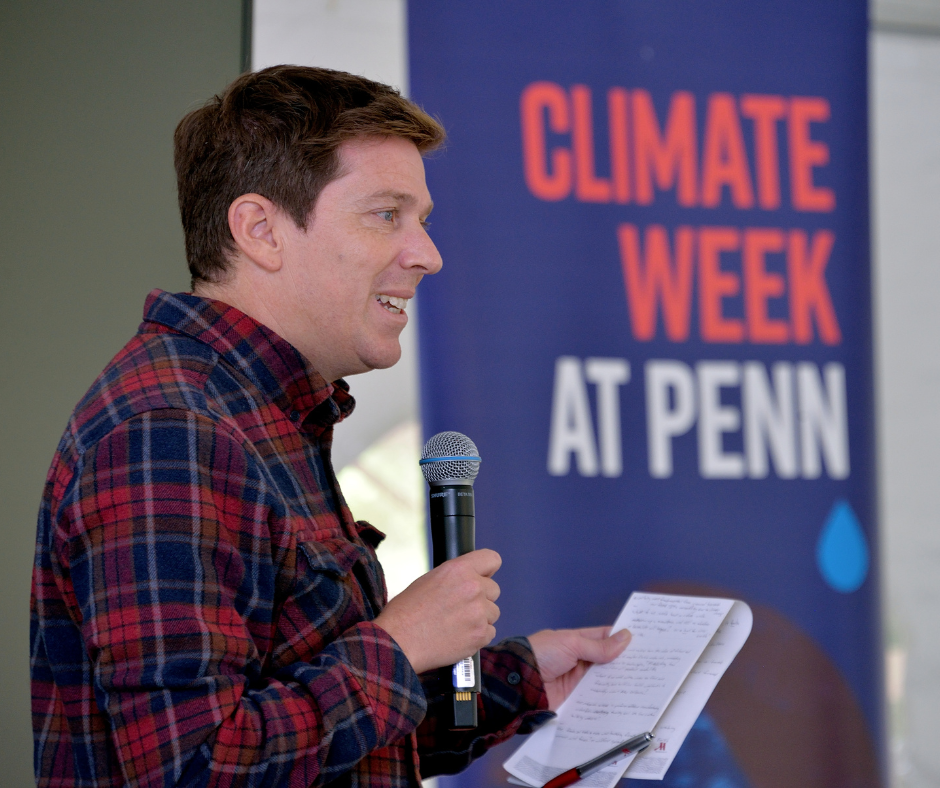
The MESE degree connects you with future leaders in energy and sustainability and gives you access to world-class experts in and outside the classroom. Source: University of Pennsylvania
University of Pennsylvania
When Benjamin Franklin founded the University of Pennsylvania, he envisioned a university where scientific discovery would translate into practical solutions for society. That idea shaped what would become the School of Engineering and Applied Science (Penn Engineering). In 1946, its researchers helped develop the ENIAC, widely regarded as the world’s first general-purpose electronic computer. Today, the same spirit of applied innovation is being directed toward another defining challenge: building energy systems that are cleaner, more resilient, and capable of supporting a low-carbon future.
The in-person Master of Science in Engineering in Energy and Sustainability (MESE) reflects this. Designed for students with technical science or engineering backgrounds, it combines rigorous coursework with team capstones, applied projects, and internship opportunities that allow students to work on real challenges across the global energy transition.
Students can choose from four concentrations: Environment and Climate Solutions, Clean Energy Technology, Society and Policy, and Economics and Innovation. While the technical core is grounded in engineering, you will also draw on Penn’s wider ecosystem, engaging with expertise across Wharton, Arts and Sciences, and the Weitzman School of Design.
Along the way, guest lectures, speaker series, and collaborative projects bring you into regular contact with practitioners across the energy sector. The relationships built through these exchanges often lead to internships and full-time roles at climate technology companies, energy storage startups, sustainability teams within major corporations, consulting firms, and public-sector organisations.

Iowa State University’s chemical and biological engineering graduates gain skills to pursue advanced degrees or move into chemistry, biology, medicine, law, or business. Source: Iowa State University
Iowa State University
Chemical engineering affects way more of your life than you might think. It’s behind the food you eat, the fuel you use, renewable energy solutions, the products in your home, and even medical and healthcare technology. And at Iowa State University’s Department of Chemical and Biological Engineering, you’ll learn how all of it connects and how you can help improve it through energy and sustainability research that matters.
There are three graduate pathways you can take. The MS in Chemical Engineering is a two-year programme where you’ll complete a research project and defend a thesis. The M.Engr. in Chemical Engineering is more flexible. You can choose between a coursework-only track or one that includes a creative project with faculty supervision.
And if you’re thinking long-term about becoming a researcher, there’s the PhD in Chemical Engineering. Across all programmes, you’ll be surrounded by a community immersed in nationally and internationally recognised chemical and biological research. With a long history as one of the nation’s first chemical engineering departments, the faculty knows what it takes to prepare you for life as an informed, capable leader.

Both broad in scope and scale, U of T students study sustainability from world-class faculty. Source: University of Toronto
University of Toronto
If universities are going to help solve the world’s sustainability challenges, the University of Toronto is a great example of how to do so. Ranked the most sustainable university in North America and top two globally for 2026, the university weaves sustainability into everything it does. Whether you’re interested in climate science, sustainable cities, or environmental geoscience, you’ll find plenty of ways to explore the natural world.
Sustainability programmes are spread across the university’s three campuses. They each have their own strengths, but all share core programmes in environment and sustainability. At the Faculty of Arts & Science, you can explore interdisciplinary options like Environmental Biology, Forest Conservation, and Environmental Geography.
The U of T Mississauga’s Environmental Science, Environmental Management, Environmental Law and Policy and Geospatial Data Science programmes combine hands-on fieldwork with ecosystems, policy, and spatial data theory. And over at U of T Scarborough, you can choose from programmes like Environmental Chemistry, Applied Climatology, Global Environmental Change, and Natural Sciences & Environmental Management — with co-op and fieldwork experiences built into them.
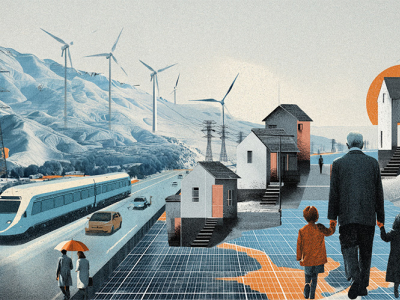
UC Berkeley researchers are exploring many ways to support clean, affordable, and sustainable energy around the world. Their work ranges from protecting forest ecosystems to studying resource shortages in built environments. Source: University of California, Berkeley
University of California, Berkeley
Another university leading in energy and sustainability is the University of California, Berkeley. Its researchers are developing renewable energy solutions, designing technologies to reduce demand, studying climate impacts, and shaping policy responses.
What’s more, there are many dedicated research centres that support their work. One of them, the Energy and Resources Group, brings together graduate students, faculty, 150 affiliated researchers across campus, and over 600 alumni across the globe.
As one of the first interdisciplinary programmes in the field, the Energy and Resources Group has built a reputation for producing forward-thinking research. Its courses cover current developments in the field and draw on various disciplinary perspectives and methodologies, including economics, social sciences, engineering, humanities, and environmental sciences.
Its two-year Energy and Resources MS, for instance, is designed to shape well-rounded, interdisciplinary leaders. It works both as a launchpad into professional careers and as a foundation for a PhD. You’ll learn the methods and perspectives needed to improve the way people interact with the environment.
*Some of the institutions featured in this article are commercial partners of Study International