
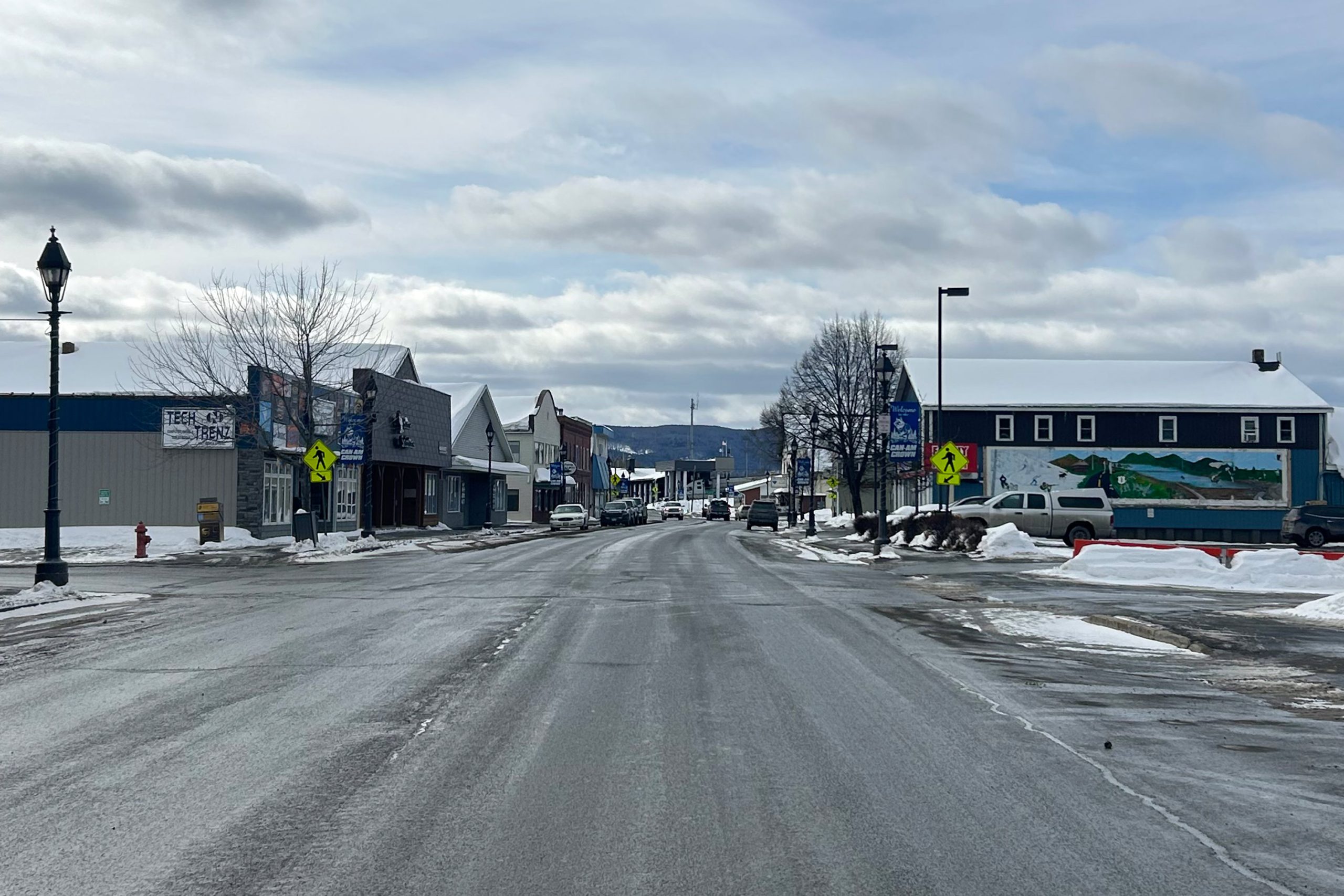

FORT KENT, Maine — Michael Robertson struggled in school almost from the very beginning. But it was in seventh grade, when he started smoking cigarettes and drinking, that school seemed to become nearly unbearable to him.
“There was always an excuse for why he couldn’t go to school,” said his mother, Danielle Forino. “Every morning, he would say he was too tired or didn’t feel good.”
At 13 years old, he was prescribed Vicodin following dental work and, his mother said, quickly started abusing it. By his sophomore year of high school, in 2017, he couldn’t get through the school day without nicotine, she recalled. By his junior year, he was addicted to oxycodone. His senior year, he enrolled at the district’s alternative schooling program, which allows students more flexibility in their learning, but was kicked out for vaping nicotine. Throughout this time, he fell further behind academically and became disengaged from school, his peers and other activities he previously enjoyed.
Nationwide, there has been a drop in the share of young people using substances such as cigarettes, alcohol, marijuana and harder drugs. But in recent years, unintentional overdoses among children and teens have spiked.
In Robertson’s hometown of Fort Kent, which hugs the Canadian border, educators have seen students arrive at school hungover, fall asleep in class and show up Monday mornings with substance-use-related summonses they received over the weekend, asking what to do. They also see students who skip school, arrive late, can’t focus, are restless and lack drive, issues that they say have worsened in recent years.
This August, Fort Kent will use new funding to try a novel solution to the problem: a public boarding school for high schoolers in recovery. Educators hope the school’s focus on abstinence and mental health will help students overcome their substance abuse problems — but first, they have to convince the teens who need help the most and are the hardest to reach that they should enroll.
“Addiction doesn’t mean a student stops being a learner,” said Tammy Lothrop, who has worked as a school social worker in Aroostook County, where Fort Kent is located, for 25 years. “When we separate the two, students fall behind academically, fall behind their peers, which leads to more shame. For the first time, we’re not asking students to choose between recovery and education.”
 Fort Kent’s population hovers around 4,000 residents. Here, a car crosses over the International Bridge at the US/Canada border before entering Fort Kent. Credit: Don Emmert/AFP/Getty Images
Related: Can ‘Sober High’ schools keep teenagers off drugs?
Substance use can be particularly harmful for young people because their brains are rapidly developing. It can disrupt that development by releasing chemicals that impede normal communication in the brain, potentially increasing anxiety and irritability and decreasing attention span, impulse control and problem-solving abilities.
In school, this can contribute to absenteeism, declining grades and dropping out, according to experts. When substance use becomes compulsive or leads to addiction, those effects are heightened.
“Substance use interferes with kids’ learning,” said Sharon Levy, a pediatrics professor at Harvard Medical School and chief of the Division of Addiction Medicine at Boston Children’s Hospital. “Substance use knocks systems out of balance.”
Youth substance abuse affects adolescents of all races, socioeconomic groups and geographies, but the way it progresses can vary greatly depending on the resources available.
In Maine, a largely rural state, there is only one inpatient facility for youth struggling with substance abuse and addiction, and limited outpatient options.
In Aroostook County, a sprawling region of 67,000 people that has higher-than-average poverty and lower-than-average educational attainment rates, preventative programs and mental health services for youth are also scarce.
When Brooke Nadeau took her first teaching job in 2020 at Fort Kent’s high school, she was somewhat naive about youth substance use: She recalled being stunned when one of her students told her they took hallucinogens on the weekends. But since then, she has become more accustomed to — and concerned about — students’ drug and alcohol use.
Nadeau, who is working toward a Ph.D. in criminal justice, started researching youth substance use and addiction support services in Aroostook County. She didn’t find much.
The school district offers preventative and educational support, including health class lessons and assemblies in middleand high school on healthy strategies for coping with mental health challenges and the dangers of substance use. It also encourages students who may be struggling with substance issues to work with the district’s social worker, who can provide short-term counseling and connect students with outside resources.
But the capacity of the district, which serves about 800 students in pre-K through 12th grade, is limited. So when Nadeau learned about the recovery high school model while conducting research for her dissertation, she immediately flagged it as something that could benefit her students.
“With the recovery high school, we can help the students get into recovery and gain coping skills early on,” said Nadeau, who grew up just outside Fort Kent. “If we stop the cycle at a younger age, give them the supports they need, they might not need to go to jail and can go to college and become functioning adults.”
Related: One state offers lessons in how to cope with the college enrollment crisis
Recovery high schools have been around for a few decades. Today, there are 46 across the country, serving youth with substance use and co-occurring disorders, such as depression and anxiety, according to Andrew Finch, who leads the nonprofit Association of Recovery Schools. Research on the schools is limited, but the data that does exist shows that students in recovery who attend these schools are more likely to abstain from drug use than students at standard high schools.
“Recovery schools can be really helpful for kids who need a place where triggers are managed,” said Levy.
The Upper St. John Valley Recovery High School will be part of the Fort Kent school district and run by the Valley Unified Education Service Center, which serves three area school districts, including Fort Kent. It will be the first recovery high school in Maine, the only one operating in a rural area, and, to serve Aroostook County’s widely dispersed population, the first with a boarding component in around 30 years. It has room to serve 14 students at a time, eight of whom will board there during the school week, and expects students to remain in the program for between 90 days and a full school year.
Students enroll voluntarily, opting into the program with support from a parent or guardian.
The school district is renting dorm space from the University of Maine at Fort Kent. The university is expected to provide the classroom and other living spaces — including a kitchen and a living room with a working fireplace — rent-free in the recovery high school’s first year. It will be staffed by a social worker trained in substance abuse and addiction treatment, an academic teacher, a paraprofessional and a dorm supervisor.
 The University of Maine at Fort Kent’s Powell Residence Hall, which has single rooms and a student lounge, is expected to provide housing for recovery high school students who board during the week. Credit: Courtesy University of Maine at Fort Kent
  Nowland Dining Hall on University of Maine Fort Kent’s campus. Credit: Courtesy University of Maine at Fort Kent
On the weekends, the boarding students will return home armed with plans to maintain their sobriety, which will allow them to practice abstinence for short time spans away from the school as they gain trust in its staying power, according to Peter Caron, alternative school coordinator, who developed the recovery high school with Nadeau. If students relapse, which he said is expected, the school will work with them to strengthen their coping skills and identify new strategies to maintain abstinence.
“We see that with adolescents in recovery facilities, they do well because of the structure, but when they return to their home communities, they fall back into old habits,” said Caron. “We need to give them more time and the opportunity to develop transitional skills.”
Caron had never heard of a recovery high school when Nadeau presented the concept to him in 2023. But when she suggested they start one in Fort Kent, he immediately agreed. “We have not been able to effectively address the issue of substance abuse in our students’ lives,” said Caron.
 Peter Caron, pictured here in his office, is one of two educators developing the recovery high school. Credit: Lana Cohen for The Hechinger Report
Once they had approval from their superintendent, Caron and Nadeau began searching for funding. Their timing was opportune: Maine had begun receiving tens of millions from nationwide settlement agreements with pharmaceutical companies accused of fueling the opioid crisis. Nadeau and Caron applied to the statewide council responsible for distributing some of these funds and were awarded $616,000.
Many here hope the school will allow students to stay more connected to their communities as they try to overcome substance abuse. Because youth addiction recovery services in Aroostook are limited, students who need treatment often have to leave their homes, and sometimes the state. That distance can create more trauma and isolation, said Lothrop, the Aroostook County school social worker.
“Throughout my years, I’ve often felt the heartbreak of knowing a student needs more support than we have for them locally,” said Lothrop. “With the recovery school, they can continue to heal without being disconnected from their roots.”
Related: A lot goes on in classrooms from kindergarten to high school. Keep up with our free weekly newsletter on K-12 education.
Despite the community’s support for the school, it faces significant barriers to success.
Among them is stigma: Many kids are afraid to reveal that they are struggling with substance abuse, especially in a small community like this one. The school’s supporters worry that even if teenagers want the help the school could offer, they’ll be too afraid to enroll.
“We know there’s a need,” said Caron, who was also born and raised in Fort Kent. “But we need to demonstrate there’s a demand.”
So far, one student has directly expressed interest, Nadeau said. Caseworkers from around the county have started contacting her about teenagers they think will be a good fit.
At the same time, the timeframe for proving the school’s value is limited.
The money from the state’s opioid settlement along with funds from school districts that send students to the recovery high school is expected to fund it for two years.
Elsewhere in the U.S., recovery high schools are funded through a variety of sources, including state and local funds, donations and tuition.
Caron and Nadeau hope to receive an additional million dollars from the state legislature so they can pilot the program for five, rather than two, years. They are working with their local legislator on a bill requesting the money, to be introduced next year.
But to receive that funding, Caron needs to show the school can fill its slots. “This is a use it or lose it proposition,” he said.
Danielle Forino said she doesn’t know whether a program like the recovery high school would have been able to help her son, Michael, who died of an overdose in 2023 at age 22. To attend the recovery school, students have to be in active recovery — sober for at least 30 days, with some exceptions, and invested in sobriety for the long term. Forino doesn’t know if Robertson would have been ready. Although during his junior year of high school he suggested he might need suboxone — a prescription medication to treat opioid addiction — he didn’t make a concerted effort to ask for help until he was 19.
 Danielle Forino, who lost her son, Michael, to an overdose. Credit: Lana Cohen for The Hechinger Report
But for Caron and others involved in the recovery high school who knew Robertson, he’s exactly the type of student they hope to help.
“We didn’t have an answer for him,” said Caron. He hopes the recovery school can be the answer for other kids who are struggling with substance use and co-occurring mental health disorders.
Ultimately, Nadeau and Caron want this to be just the start, that their school will flourish, normalize youth recovery and spur the development of recovery schools statewide.
But for now, their focus is closer to home.
Success, said Nadeau, would be “if one life is saved.”
Contact editor Caroline Preston at 212-870-8965, via Signal at CarolineP.83 or on email at [email protected].
This story about substance use disorder was produced by The Hechinger Report, a nonprofit, independent news organization focused on inequality and innovation in education. Sign up for the Hechinger newsletter.
Was this story helpful? Leave a tip to support your education reporters.
The Hechinger Report is a nonprofit newsroom powered by reader support

Republish our articles for free, online or in print, under a Creative Commons license.