
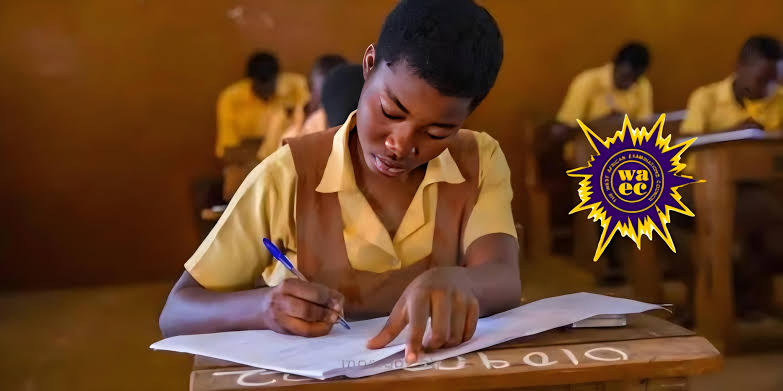

When the West African Examinations Council (WAEC) released the 2026 West African Senior School Certificate Examination (WASSCE) results, the headline most Nigerians saw was simple: 61.54 per cent of candidates obtained at least five credits, including English Language and Mathematics. It quickly became the defining statistic of the year’s examination.
Yet, behind that single figure lies a much bigger story. The 2026 results offer valuable insights into the strengths and weaknesses of Nigeria’s secondary education system. They reveal changing trends in examination malpractice, the gradual expansion of computer-based testing, the growing participation of students with disabilities, gender performance patterns and the scale of the challenge still facing the country’s education sector.
Beyond determining who proceeds to university, the statistics paint a broader picture of learning outcomes, examination integrity and access to quality education.
Here are 12 figures from the 2026 WAEC results that deserve far more attention than they have received.
1. Nearly two million candidates registered for the examination
A total of 1,959,668 candidates from 24,207 schools registered for the 2026 WASSCE across Nigeria, Benin Republic, Côte d’Ivoire and Equatorial Guinea. Of these, 1,950,726 candidates eventually sat the examination.
This remains one of the largest coordinated secondary school examinations on the African continent.
The figures demonstrate that demand for secondary education continues to grow despite inflation, economic hardship and rising education costs. It also reflects the enormous logistical responsibility placed on WAEC each year, from printing question papers to coordinating examiners and processing millions of scripts within weeks.
2. Six out of every ten candidates met the university admission benchmark
Perhaps the most widely discussed figure is that 1,200,514 candidates, representing 61.54 per cent, obtained at least five credits, including English Language and Mathematics.
This benchmark matters because it is the minimum academic requirement for admission into most Nigerian universities, polytechnics and colleges of education.
For more than 1.2 million students, the results opened the door to higher education. However, the statistic also tells another story.
3. Almost four in every ten candidates failed to meet the minimum requirement
If 61.54 per cent met the benchmark, then 38.46 per cent did not. That translates to roughly 750,000 candidates who failed to obtain the combination of credits required for admission into many tertiary institutions.
This figure raises difficult questions about learning quality in many schools.
While failure in English Language or Mathematics alone can prevent candidates from meeting university entry requirements, broader issues including teacher shortages, inadequate infrastructure, poverty, overcrowded classrooms and unequal access to quality teaching continue to affect learning outcomes across many parts of the country. For policymakers, this remains one of the most significant statistics from the examination.
4. More than 1.68 million candidates earned five credits but not necessarily in English and Mathematics
One statistic that received little public attention is that 1,687,378 candidates, representing 86.50 per cent, obtained at least five credits when English Language and Mathematics were not both compulsory.
The gap between 86.50 per cent and 61.54 per cent highlights the decisive role English Language and Mathematics continue to play in determining tertiary education eligibility.
Many candidates performed reasonably well overall but were unable to satisfy university admission requirements because of weaknesses in one or both of these core subjects.
The implication is clear: improving instruction in English and Mathematics could substantially increase university readiness without requiring dramatic improvements across every subject.
5. Examination malpractice declined, but the numbers remain alarming
WAEC withheld the results of 167,486 candidates, representing 8.59 per cent of the total candidature, over alleged examination malpractice.
On the surface, there is encouraging news. The figure represents a decline from 9.7 per cent recorded in 2025.
However, the improvement should not overshadow the scale of the challenge. Nearly one out of every twelve candidates had results withheld over alleged malpractice.
According to WAEC, the major concerns included the continued use of mobile phones inside examination halls despite existing bans, organised cheating in some schools and the involvement of some supervisors and invigilators in examination fraud. Security agencies reportedly arrested some of those implicated.
The statistics suggest that while anti-malpractice measures may be producing gradual results, examination integrity remains one of Nigeria’s biggest education challenges.
6. Female candidates continued to dominate participation and success
Female candidates accounted for 997,267 candidates (51.12 per cent), while 953,459 males (48.88 per cent) participated in the examination.
Among candidates who obtained five credits including English Language and Mathematics, 641,631 were female, compared with 558,883 males.
Although these figures do not necessarily prove that girls performed better proportionally, they reinforce an increasingly visible trend in national examinations: female participation continues to grow, and girls remain highly competitive academically.
This represents a remarkable shift from decades when access to education for girls was significantly lower in many parts of the country.
7. More than 116,000 results are still being processed
WAEC disclosed that 1,834,695 results (94.05 per cent) had been fully processed and released.
However, 116,031 candidates (5.95 per cent) were still awaiting complete processing. This does not automatically indicate malpractice.
According to WAEC, some results remain under processing because of issues requiring further verification before final release.
For affected candidates, the figure is a reminder that a missing result is not always a failed examination.
Read also:
WAEC: 38% of candidates fail to secure five credits in english, maths and other key subjects
WAEC 2026: WAEC withholds 167,486 WASSCE results over alleged examination malpractice
8. Students with disabilities are increasingly being included
The 2026 examination included 1,213 candidates with special needs, comprising visually impaired candidates, hearing-impaired candidates, physically challenged learners and others requiring specialised support.
Although this represents a small proportion of the total candidature, it reflects continuing efforts to make national examinations more inclusive.
Inclusive education is often discussed in policy documents, but participation data such as this provides evidence that more learners with disabilities are being accommodated within Nigeria’s examination system.
9. WAEC is steadily expanding digital assessment
The 2026 examination marked the second edition of the Computer-Based WASSCE for school candidates.
Although many schools still used the traditional pen-and-paper format, a significantly larger number adopted computer-based testing compared with previous years. WAEC also introduced innovations such as the Digital Examiner Mark System, serialised question papers and an improved e-PIN platform for result checking.
The gradual digital transition could improve efficiency, shorten processing time and strengthen examination security in future years.
10. More than 102,000 examiners marked scripts
Behind every WAEC result is an enormous human operation. WAEC disclosed that 102,708 examiners participated in marking scripts across 88 marking venues nationwide.
The scale of this exercise illustrates why result processing remains one of the largest educational operations undertaken annually in Nigeria.
11. Some candidates are still unable to access their results because of unpaid government debts
One of the less-publicised aspects of the release is that candidates sponsored by state governments indebted to WAEC could not immediately access their results until outstanding payments are settled.
This means some students who completed their examinations successfully may still face delays for reasons entirely beyond their control.
It is another reminder that education financing extends beyond classrooms, it also affects assessment and certification.
12. The 2026 figures reveal gradual progress but also unfinished business
Taken together, the statistics tell a balanced story. Nigeria recorded over 1.2 million candidates meeting the university benchmark. Examination malpractice declined slightly, igital assessment expanded, students with disabilities continued to participate, and female candidates maintained strong representation.
Yet the figures also show that hundreds of thousands of students remain academically unprepared for tertiary education, examination malpractice continues to threaten public confidence, and systemic inequalities still influence educational outcomes.
Every WAEC result represents an individual student’s journey, but collectively, the numbers tell the story of Nigeria’s education system.
The 2026 WASSCE statistics are more than examination results; they are indicators of teaching quality, policy effectiveness, school readiness, technological progress and the country’s investment in human capital.
As debates continue over curriculum reform, teacher quality, school funding and examination integrity, these figures should serve not merely as annual headlines but as evidence for shaping future education policy.
For parents, teachers, school leaders and policymakers alike, the real value of the 2026 WAEC results lies not only in who passed or failed, but in what the statistics reveal about where Nigerian education is today and where it still needs to go.